INTRODUCTION
Artistic freedom and protection of cultural diversity
Artistic freedom [1] is the freedom to imagine, create and distribute diverse cultural expressions free of governmental censorship, political interference or the pressures of non-state actors. It includes the right of all citizens to have access to these works and is essential for the wellbeing of societies.
Artistic freedom embodies the following bundle of rights protected under international law:
- the right to create without censorship or intimidation
- the right to have artistic work supported, distributed, remunerated
- the right to freedom of movement
- the right to freedom of association
- the right to protection of social and economic rights
- the right to participate in cultural life
Artistic freedom and the protection of diverse cultural expressions are mutually reinforcing pillars of cultural rights. Artistic freedom allows artists, writers, musicians and other cultural practitioners to express their ideas openly, to work in different languages, and to draw on a wide range of genres, themes and artistic methods. Cultural diversity, in turn, is the living expression of this freedom: it embodies a plurality of voices, perspectives and forms of self-expression. Policies that safeguard and promote cultural diversity strengthen artistic freedom by preventing the monopolisation of the cultural sphere and ensuring public access to a broad spectrum of cultural expressions. Restrictions on artistic freedom inevitably diminish cultural diversity, and the erosion of cultural diversity weakens the very conditions necessary for free artistic expression.
Conscious that cultural diversity forms a common heritage of humanity and a foundation for sustainable development, mutual understanding and international security, on 20 October 2005, the UNESCO General Conference adopted the Convention on the Protection and Promotion of the Diversity of Cultural Expressions [2]. The document builds on the approach of the European Cultural Convention (1954 [3]) and the UNESCO Universal Declaration on Cultural Diversity (2001 [4]), emphasising the partnership between the state, civil society and the private sector in cultural policy.
The first guiding principle of the Convention states: “Cultural diversity can be protected and promoted only if human rights and fundamental freedoms, such as freedom of expression, information and communication, as well as the ability of individuals to choose cultural expressions, are guaranteed”.
The situation with artistic freedom in Belarus after 2020
On 4 August 2006, the Republic of Belarus ratified the UNESCO Convention, committing itself to adopt measures to protect and promote cultural diversity. However, ratification alone does not guarantee implementation of its principles. Independent monitoring of the Convention’s implementation in 2015 assessed Belarus’s cultural policy at 10.3 points out of 30 (across five core dimensions [5]), placing it in the “low” category. In 2019, the score rose slightly to 11.5, but by 2023 it had dropped by almost half to 6.6 points, on the threshold between “low” and “very low”.
Long before 2020, cultural life in Belarus was split between the state-controlled sector and an independent sphere operating under constant pressure. Subsidies were allocated through opaque procedures, creative unions faced political interference, ideologically loyal cultural figures were promoted, and unwritten “ban-lists” of artists shaped access to public stages and resources.
After the 2020 presidential election, the wave of large-scale political repression dramatically escalated these tendencies. Space for artistic freedom shrank at speed, and the boundaries of what was deemed permissible tightened even further. New supervisory bodies were established, registers of “approved” organisations and specialists were introduced, blocklists of disfavoured artists widened, public associations were liquidated en masse, and creative unions were brought into line through systematic “normalisation”.
Cultural figures have come under particularly harsh targeting, with the act of creating becoming dangerous, and artistic expression potentially resulting in arrest, imprisonment or even death. The real target is not art itself, but rather the exercise of fundamental civil and political rights – freedom of expression, freedom of association, the right to peaceful assembly, and the right to share and receive information. Authorities consistently use anti-terrorism and anti-extremism laws to silence dissent and to restrict access to information.
Why it is difficult to identify clear-cut violations of artistic freedom?
In today’s Belarusian context, repression is systemic and multifaceted. Cultural figures are more often targeted not for specific artistic expression, but for their personal convictions and political views. Sometimes a work of art – a painting, poem or song – may draw the authorities’ attention, yet the subsequent formal charges almost always concern alleged “political activity”. The key details of criminal and administrative cases, dismissals or instances of censorship frequently remain obscured. What becomes public is limited to the formal articles of indictment or indirect indications of the true motives. Many forms of pressure, including economic and psychological coercion, go entirely undocumented.
Nevertheless, even under such conditions, it is possible to identify cases in which creative expression and professional cultural activity themselves served as the direct trigger for persecution. These cases are examined in the following sections.
ARTISTIC EXPRESSION AS AN OFFENCE
The instances detailed below illustrate how cultural and artistic engagement in Belarus can serve as the primary justification for an accusation, leading to criminal or administrative legal action and thereby directly infringing upon artistic freedom.
ALEŚ PUŠKIN: PAINTING AND PERFORMANCE ART
5 years in prison – and death – for paintings and performance
Aleś Puškin was one of Belarus’s most renowned non-conformist painters, a theatre artist, performer, art curator, author of the soc-art manifesto, and an active participant in the national revival movement. He had repeatedly faced persecution for his artistic expression and civic stance.
Puškin was arrested on 30 March 2021. A year later, on 30 March 2022, a court sentenced him to five years in a high-security penal colony. The charges were brought under two articles of the Criminal Code: incitement of hatred (Article 130) and desecration of state symbols (Article 370).
The grounds for prosecution stemmed from the display of Puškin’s 2014 portrait of Jaŭhien Žychar – an anti-Soviet partisan holding a rifle – exhibited at the Urban Life Centre in Hrodna. On 22 March 2021, SB. Belarus Today published a propagandistic article [6] presenting Žychar’s biography and the exhibition in a distorted manner. The criminal case later also included portraits of Michał Vituška and Usievaład Rodźka – other members of the post-war anti-Soviet resistance in Belarus.
According to investigators [7], Puškin had “created and publicly displayed portraits of Nazi accomplices presented as Belarusian patriots and heroic figures”, and had “publicly demonstrated the portrait of Jaŭhien Žychar during the Hrodna exhibition”, allegedly committing acts “aimed at rehabilitating Nazism”.
The charge of desecrating state symbols was linked to the artist’s most famous performance –”Manure for the President” [8]. In spring 2021, Puškin recreated a modified version of this performance at the Belarusian protest-art exhibition Every Day, which opened on 25 March in Kyiv. Investigators claimed he had thereby “insulted state symbols <…> and, seeking to avoid responsibility, carried out his criminal acts on the territory of Ukraine”.
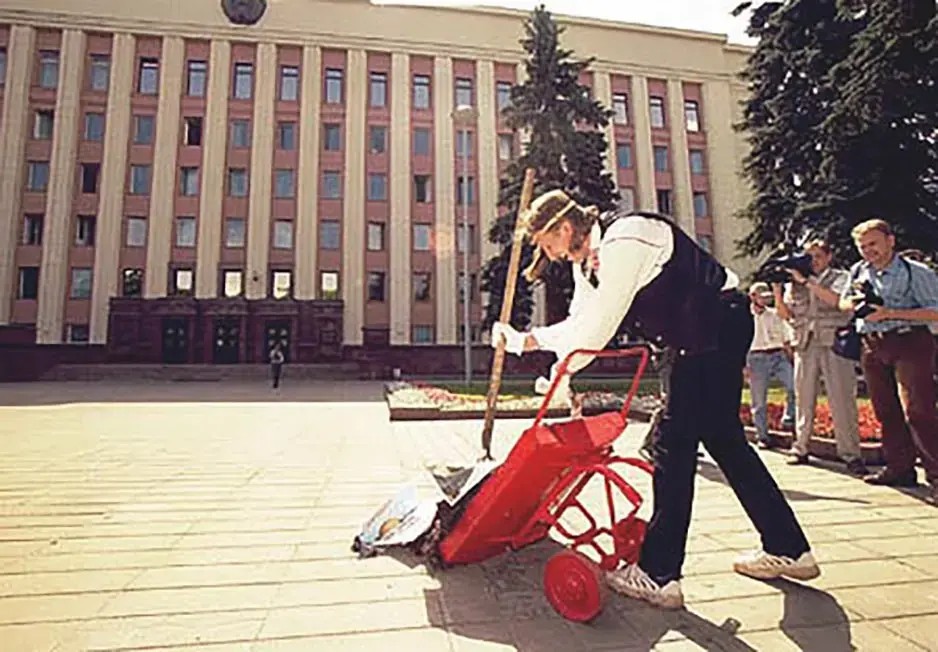
During the night of 10–11 July 2023, the administration of Prison No. 1 in Hrodna announced Puškin’s death. According to available information, the political prisoner and artist died in intensive care from a perforated stomach ulcer, the result of inadequate medical treatment in custody.
A few days later, it emerged that on 30 May – shortly before his death – Aleś Puškin had been expelled from the Belarusian Union of Artists.
PAVIEŁ BIEŁAVUS: NATIONAL CULTURE
13 years’ imprisonment for promoting Belarusian cultural and national symbols
Pavieł Biełavus is a cultural manager and entrepreneur, co-founder of the independent platform Art Siadziba (2011) and creator of the national-symbol and souvenir shop Symbal.by (2014), which became one of the symbols of the peaceful protests in the summer of 2020.
Biełavus was arrested on 15 November 2021. Eighteen months later, on 11 May 2023, a court sentenced him to 13 years in a medium-security penal colony and imposed a fine of 18,500 Belarusian roubles (~7300 USD). Property belonging to Biełavus and his family, worth more than 50,000 Belarusian roubles (~19 800 USD), was seized, including vehicles and some household equipment.
He was charged under four articles of the Criminal Code: organising and preparing actions that grossly violate public order (Art. 342), high treason (Art. 356), creating an extremist formation (Art. 361-1), and calling for actions harmful to national security (Art. 361). All charges stemmed from Biełavus’s professional activity – organising concerts, literary events and lectures, and promoting national symbols, Belarusian culture and the Belarusian language. According to investigators [9], he had “carried out active work over ten years aimed at changing state power by unconstitutional means” and, “under the guise of cultural and historical development, disseminated ideas of Belarusian nationalism”.
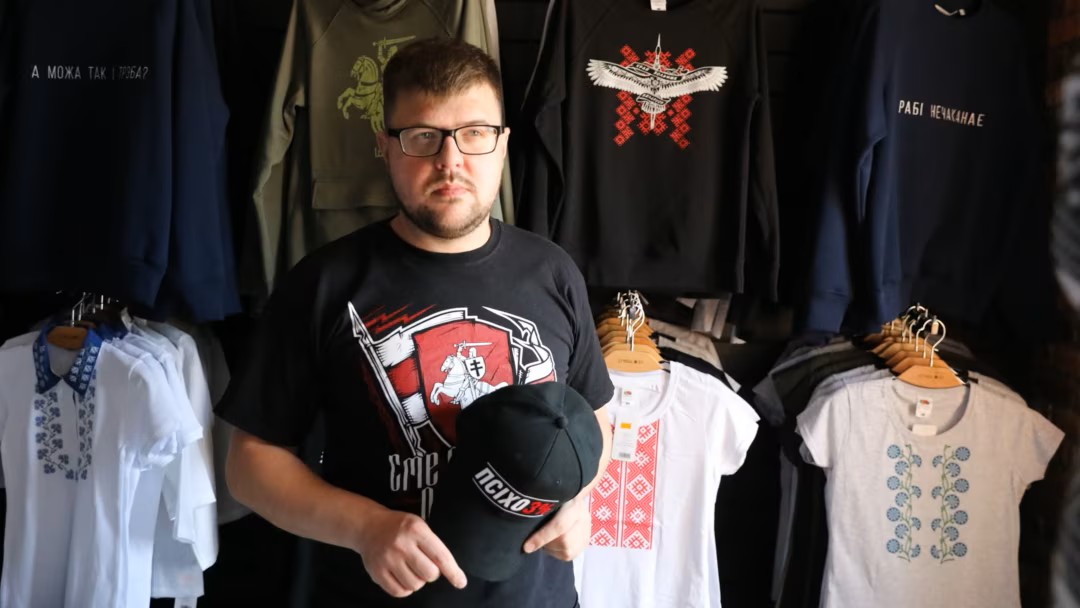
Among the distinct charges, one involved the accusation of “leading an extremist formation”. Investigators asserted that Biełavus ‘served on the supervisory board and participated in the leadership’ of the Belarusian Council for Culture. This EU-registered non-profit organisation supports Belarusian cultural figures and initiatives. By June 2022, this group had been designated an “extremist formation” in Belarus, a point at which Belavus had already spent seven months in detention.
Political prisoner Pavieł Biełavus remains in a penal colony. He is included on the official lists of “extremists” and “terrorists”.
TOR BAND: MUSIC
7.5 to 9 years in prison for songs
The rock band Tor Band was formed in Rahačoŭ in 2017 and rose to prominence in 2020, when their songs became musical symbols of the mass protests.
Musicians Dzmitryj Hałavač, Jaŭhien Burło and Andrej Jaremčyk were arrested on 28 October 2022. A year later, on 31 October 2023, a court sentenced them to 9, 8 and 7.5 years in a medium-security penal colony, as well as a 3,700-rouble fine each (~1100 USD). They were charged under four articles of the Criminal Code: insulting the president (Art. 368), creating an extremist formation (Art. 361-1), inciting hatred (Art. 130), and discrediting Belarus (Art. 369-1). Dozens of musical instruments and pieces of concert equipment were confiscated as part of the case.
The political themes of Tor Band’s songs served as the basis for the criminal prosecution of the group’s members. Below are excerpts from several lyrics that illustrate their artistic message and the nature of the “crime” allegedly committed:
“We are not cattle, nor a herd of cowards, / we are a living people, we are Belarusians!
With faith in our hearts, we stand as one, / the banner of freedom above our heads!”
(“We Are Not a Little People”)“Raise your face and look up high, / enough of enduring – step forward.
Enough of living as if you were a guest, / here is your language, here is your native flag.”
(“Native Land”)“We’re tired of you, / we don’t believe your words.
How can you not understand? / We want to live differently.”
(“Leave”)
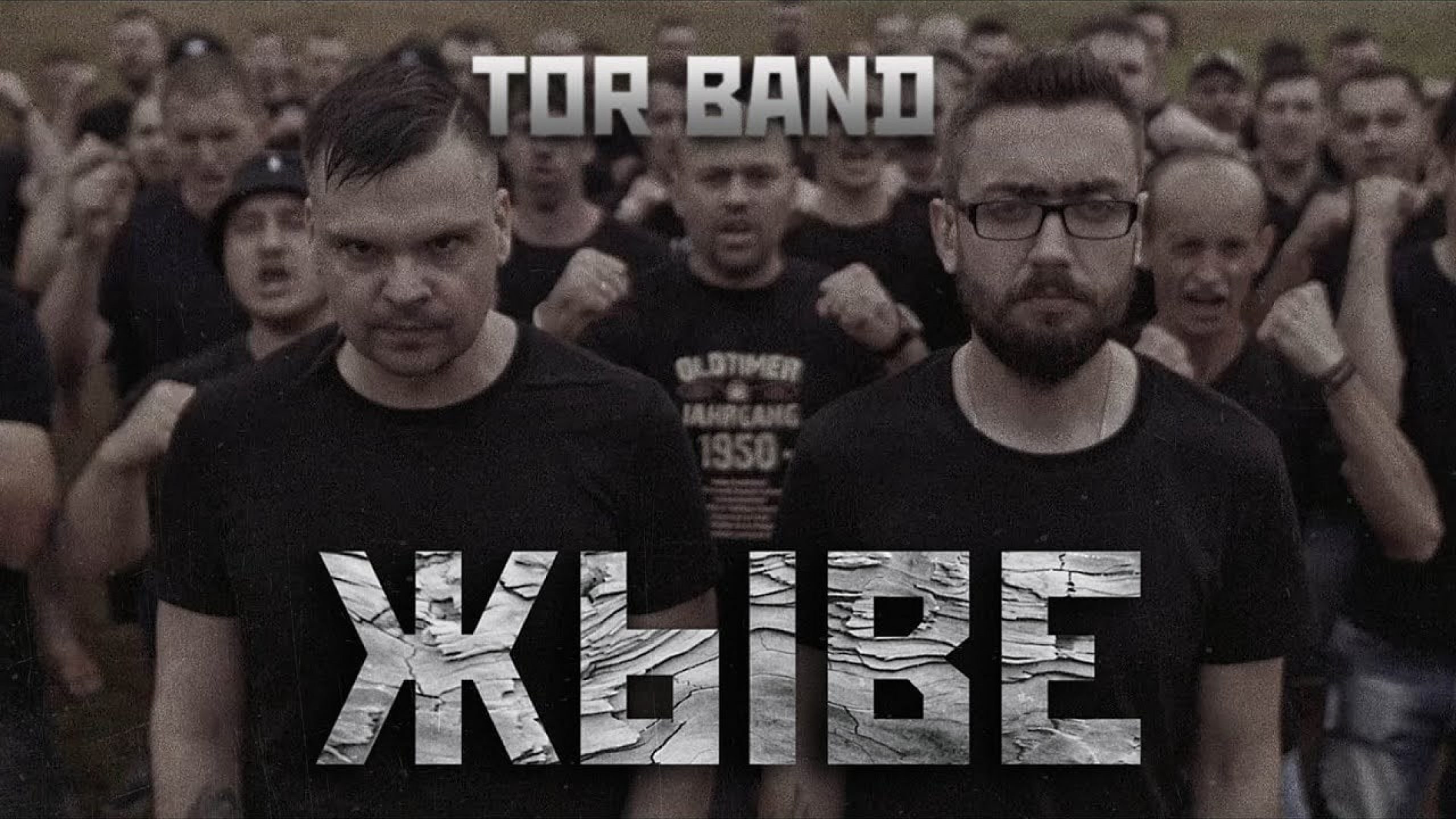
After the musicians were detained, it became known that – apparently with a retroactive date of 29 August 2022 – the authorities had already classified the group’s creative output as “extremist materials”. This designation covered their logo, social media accounts, YouTube channel and ten songs, including “Long Live”, “Go”, “Who If Not You?”, “Mother”, “We Are Not a Little People”, “Without War”, “A Belarusian to a Belarusian is a Belarusian”, “Dead Maroz”, “We Will Become Stronger!” and “Native Land”.
Two months after the arrests, on 16 January 2023, the Committee for State Security (KGB) designated Tor Band an “extremist formation”, and the three musicians – along with Julija Hałavač, Dzmitry’s wife and the band’s press secretary – were labelled “members” of this formation. Tor Band thus became the first (but to date not the only [10]) musical group to be included on the list of “extremist formations”.
The imprisoned musicians Dzmitryj Hałavač, Jaŭhien Burło and Andrej Jaremčyk remain behind bars, serving their sentences in a penal colony. There are reports of serious health problems affecting drummer Jaŭhien Burło. All three are listed as “extremists”.
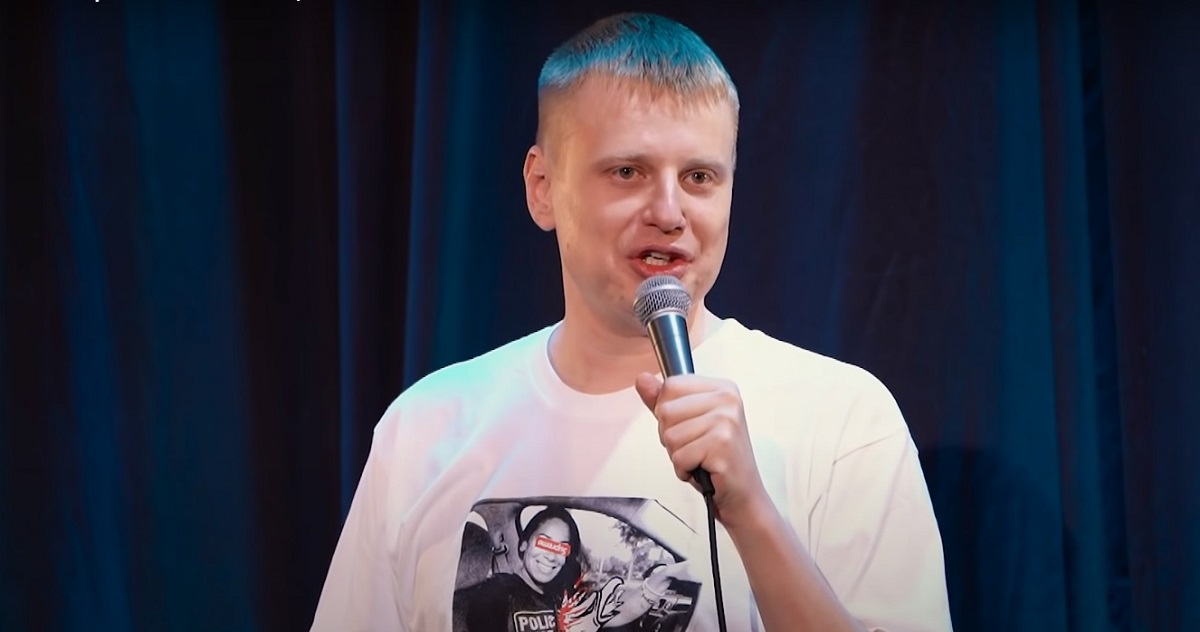
SŁAVA KAMISARANKA: SATIRE AND STAND-UP
6 years’ imprisonment (in absentia) for jokes
Słava Kamisaranka is one of the most recognisable Belarusian stand-up comedians, who had been living in Russia since 2008.
Following the 2020 presidential election, he spoke openly about electoral fraud and condemned the violence used against protesters. In his stand-up routines, he repeatedly parodied Alaksandr Łukašenka. After the November 2020 episode of the YouTube show What Happened Next? in which Kamisaranka mocked Łukašenka, calling him a “cheep-cheep” figure and ridiculing his appearance before protesters wearing a bulletproof vest and carrying an assault rifle (23 August 2020), the previously issued permits for two concerts in Minsk were cancelled. The organisers received a notice from the Minsk City Executive Committee’s Department of Culture stating that the decision had been taken “after reviewing material from the comedian’s performances posted online”. This effectively barred Kamisaranka from performing in Belarus.
In January 2022, after receiving a warning about a possible attempt by Belarusian security services to abduct him back to Belarus, Kamisaranka left Russia. The following month, it emerged that a criminal case had been opened against him and he had been placed on a wanted list. On 15 August 2024, the Investigative Committee launched [11] special proceedings – a trial in absentia – on three charges under the Criminal Code: insulting the president (Article 368), defamation of the president (Article 367) and incitement of hatred (Article 130). On 30 December 2024, he was sentenced in absentia to six years’ imprisonment.
For his satirical monologues, Słava Kamisaranka has been convicted in absentia in Belarus, added to the lists of so-called “extremists” and “terrorists”, and his website and YouTube, Instagram and TikTok accounts have all been designated “extremist materials”. In April 2025, he was stripped of his Russian citizenship. He currently resides in the EU.
ANDREJ JANUŠKIEVIČ AND NASTA KARNACKAJA: LITERATURE
28 and 23 days of administrative arrest for books
Andrej Januškievič is a publisher and author, a candidate of historical sciences, who founded the publishing house Januškievič in 2014, specialising in Belarusian-language publications. Nasta Karnackaja is a book blogger, literary critic and promoter of Belarusian literature, holding a master’s degree in philology.
On 16 May 2022, the private publishing house Januškievič – which had already endured a police raid, confiscation of equipment, six-month bank account blockade and eviction from its office –opened a new bookshop, Knihaŭka, in central Minsk. The same day, propagandists Ludmiła Hładkaja, Ryhor Azaronak and Stanisłaŭ Jaskievič appeared at the shop. They posed provocative questions, accused the owners of “nationalism” and of selling “extremist literature”. They took issue with several books, including an English-language illustrated history of Belarus, and works by Uładzimir Niaklajeŭ (Niaklajeŭ: An Unfinished Autobiography) and Uładzimir Arłoŭ (Fatherland: A Pictorial History. Part One). They theatrically recited from the latter:
“We are Belarusians, today and tomorrow,
We are Belarusians through centuries of time.
The untamed Lithuanian Pahonia
Calls on us to defend our fathers’ land.”
Shortly afterwards, security officers arrived, conducted a full search, confiscated around 200 books and sent 15 of them for “expert examination”. The shop was ordered to close.
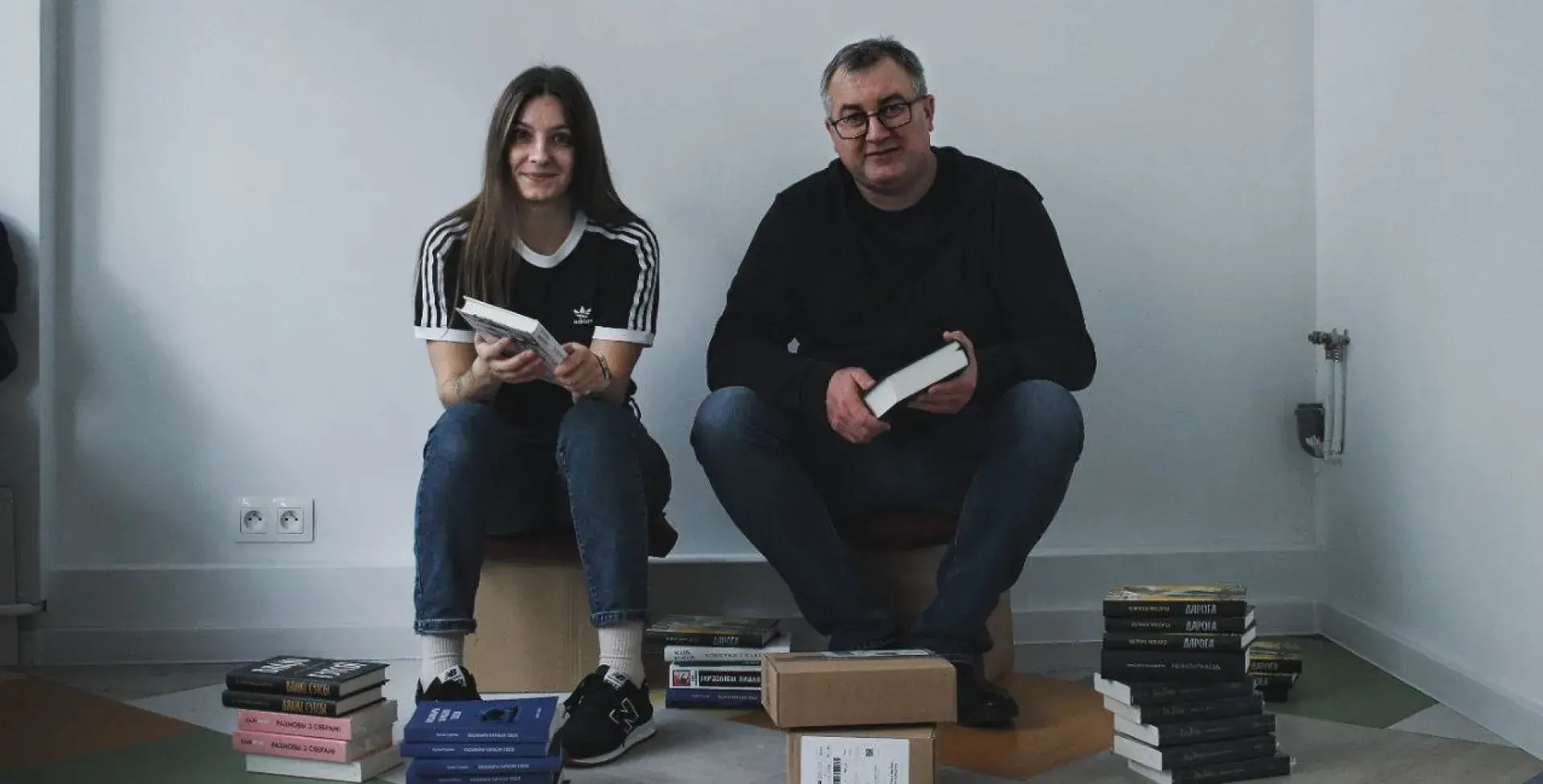
Andrej Januškievič and bookshop staff member Nasta Karnackaja were detained and charged under Article 19.1 of the Administrative Offences Code for allegedly “minor hooliganism” – a provision frequently used since 2020 when no actual offence exists, but authorities need a formal pretext for arrest. Januškievič spent 28 days in custody, and Karnatskaya – 23.
In the days following the raid, state media and propaganda channels churned out defamatory content about the publishing house and its staff, using phrases such as “attempted to open a protest bookshop in Minsk” and “shitty bookshop” [12].
In 2022, both Andrej Januškievič and Nasta Karnackaja left Belarus. They continue the work of their publishing house, liquidated in Belarus, from Poland.
“VOLNYJA KUPAŁAŬCY”: THEATRE
Designated as an “extremist formation” for staging plays
On 16 August 2020, actors and staff of the Janka Kupała National Academic Theatre released a video statement condemning the “terror and violence” used against peaceful protesters. The following day, the theatre’s director – and former Minister of Culture – Pavieł Łatuška was dismissed. In solidarity with him, more than 60 actors and employees resigned. The theatre was effectively placed under the control of the security services. At the same time, the Ministry of Culture not only failed to defuse the situation but also actively put pressure on the company. As a result, the former employees formed an independent troupe, Volnyja Kupałaŭcy (Free Kupała Theatre Troupe).
Since 2021, the independent theatre group has been operating in exile in Poland, continuing to stage productions about freedom, identity, human rights and Belarusian culture. Their repertoire includes The Zekameron (based on the book by Maksim Znak), Geese–People–Swans (based on Alhierd Bacharevič’s novel Dogs of Europe), The Suitcase (by Małgorzata Sikorska-Miszczuk), and other works that address sensitive issues within Belarusian society. It is precisely this artistic work that has made the troupe a target of persecution by the Belarusian authorities.
On 13 February 2024, the troupe’s Facebook, Instagram, SoundCloud and YouTube pages, as well as its logo and email address, were added to the “National List of Extremist Materials”. On 13 December 2024, the Ministry of Internal Affairs designated Volnyja Kupałaŭcy as an “extremist formation”. It named several leading actors – People’s Artist of Belarus Zoja Biełachvoscik, as well as Aleh Harbuz, Valancina Harcujeva, Siarhiej Čub, Alaksandr Ziulenka, Kryscina Drobyš, Michaił Zuj and director Alaksandr Harcsujeŭ – as “participants” of that formation.
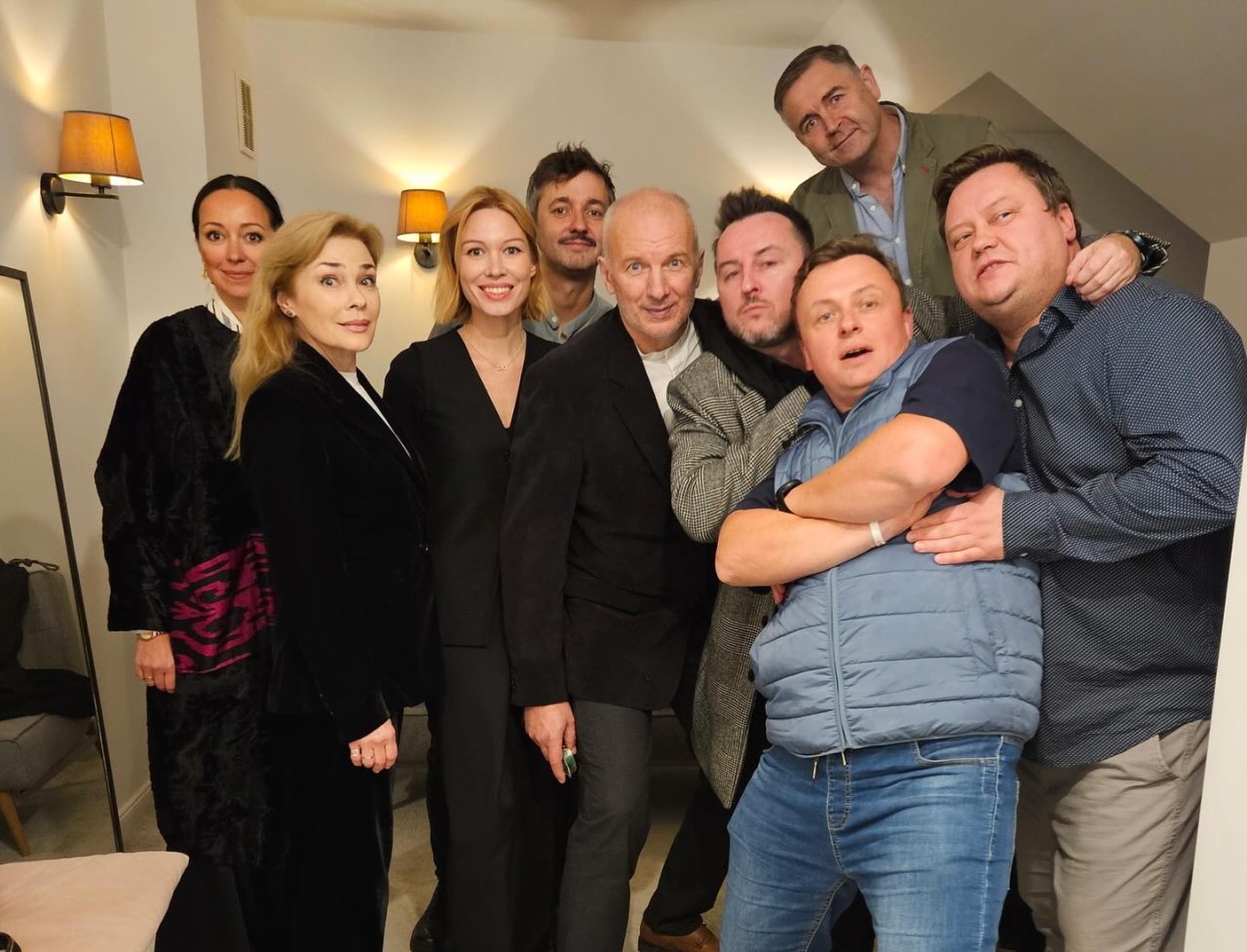
This designation means that any interaction with the troupe – even watching their performances online – may be treated as participation in extremist activity. Viewers, donors, and subscribers inside Belarus can face prosecution under Articles 361-1 and 361-4 of the Criminal Code, which carry penalties of up to 7 years’ imprisonment. As a result, both the troupe and their Belarusian audience face the threat of disproportionate punishment. Given recent practice, the troupe members themselves are almost certainly facing in absentia proceedings and in absentia sentences – the mechanisms increasingly used against Belarusian cultural figures working in exile.
Other examples and forms of persecution for artistic expression
Additional forms of persecution targeting professional activity or artistic expression include:
- Administrative arrests for participation in officially permitted cultural events such as the “Piešachodka” music project, for public poetry readings, or for impromptu concerts in Minsk courtyards (cases of Ivan Pirejka, poet Pavieł Horbač and the band Laudans in 2020);
- Arbitrary detentions for “undesirable” artworks (e.g., artist Ludmiła Ščamialova);
- Criminal prosecution for performing a song with lyrics deemed unacceptable by the authorities (the case of rapper Jaŭhien Piatroŭ);
- Detention of tour guides together with their groups (the case of Aksana Mankievič);
- Summons for interrogation over graphic design, illustrations or participation in book series (these cases exist, though details remain confidential);
- Pressure on creators of satire, including the musical duo Arystakratyčnaja Blednasć (Aristocratic Pallor);
- Designation of cultural brands as “extremist formations”, such as Belaruskicry, for producing jewellery with Belarusian national symbols;
- Repression linked to grassroots activism and street performance, ranging from painted hay bales to cemetery performances, symbolic “burials” of Łukašenka, burning effigies and other acts of artistic symbolism.
A case of particular significance is the so-called “Round Dance Case” in Brest – the most significant collective criminal case linked to a spontaneous round dance in the city centre on 13 September 2020. During a protest march, the crowd suddenly stopped. When the song Three Tortoises – a major hit by N.R.M. and an informal anthem of the protests, began playing from a portable speaker, participants joined hands and formed a circle for a round dance. One defendant later said it felt like a carnival. Water cannons were used to disperse the crowd, and more than 140 people ultimately became defendants [13]. In retrospect, the episode resembles a form of performative activism – an improvised, symbolic artistic expression of civic resistance.
A further form of pressure is the prohibition of cultural products by designating them as “extremist materials” or, in the case of printed publications, as “capable of harming national interests”. To document such cases, a dedicated monitoring platform – Belarus. Banned Books [14] – has been established.
CONCLUSION
Culture is not merely one sector of public life; it is a foundation of international peace, sustainable development, and understanding both within societies and between nations. As an area intrinsically linked to human rights, culture can thrive only where fundamental rights are upheld and artistic freedom – and the cultural diversity that flows from it – are guaranteed.
In contemporary Belarus, where fundamental human rights – including the rights to life, freedom of expression, freedom of association and access to information – are not upheld, the space for cultural rights is rapidly contracting. Despite its international commitments, including its ratification of the UNESCO Convention on the Protection and Promotion of the Diversity of Cultural Expressions, state policy in recent years has sought not to foster cultural diversity but to suppress it. This is reflected in the emergence of terms such as “picketing by means of songs” or “extremism with a guitar”, phrases that vividly expose the absurd logic guiding the application of legislation – including when it is used to target artistic expression.
The ongoing persecution of artists, musicians, writers, cultural managers, theatre groups and other cultural figures in Belarus is most often linked to their civic stance and personal views; in some cases, it stems directly from their artistic expression or professional work. This may involve bold texts and paintings, satirical sketches, performances addressing sensitive topics, or the promotion of national symbols, the Belarusian language or Belarusian books – as the examples in this report clearly demonstrate. Political songs, satire, and even sharp emotional criticism of the authorities are all forms of freedom of expression protected under artistic freedom and freedom of speech.
Repression and censorship against cultural figures in Belarus are not only personal but systemic. By silencing individual creators and collectives, the state simultaneously restricts society’s access to a diversity of cultural forms and alternative viewpoints. This leads to the impoverishment of the cultural landscape and the dismantling of the mechanisms for the free exchange of ideas, without which the development of art, culture, and society is impossible.
In these circumstances, the contribution of organisations defending the right to create and documenting violations remains vital, recognising artistic freedom as part of the broader system of civil and political rights.
A few days before the fatal arrest, Aleś Puškin said: “The Belarusian revolution of dignity is an artistic one.” Today these words remain as relevant as ever, reminding us that creative expression endures as a space of personal and collective freedom – one that no political regime can ever fully subjugate.
[1] Artistic freedom.
[2] The 2005 Convention on the protection and promotion of the diversity of cultural expressions.
[3] European Cultural Convention.
[4] UNESCO Universal Declaration on Cultural Diversity.
[5] The five dimensions of cultural policy: conditions for the development and expression of diversity, the cultural sector’s impact on the economy and development indicators, internal resources and the development potential of the cultural sphere, the development of intercultural interaction and exchange, cooperation among different actors involved in cultural policy.
[6] https://www.sb.by/articles/portret-predatelya44.html.
[7] https://sk.gov.by/ru/news-ru/view/alesja-pushkina-ozhidaet-sud-za-reabilitatsiju-natsizma-10783/.
[8] Aleś Puškin Website.
[9] sk.gov.by.
[10] 10 July 2025 года, folk-punk-band Dzieciuki from Hrodna was branded an “extremist formation”.
[11] https://sk.gov.by/ru/news-ru/view/spetsialnoe-proizvodstvo-11810/.
[12] Ludmiła Hładkaja. SB – Telegram.
[13] The “Round Dance Case” in Brest.
[14] https://bannedbooks.penbelarus.org/.